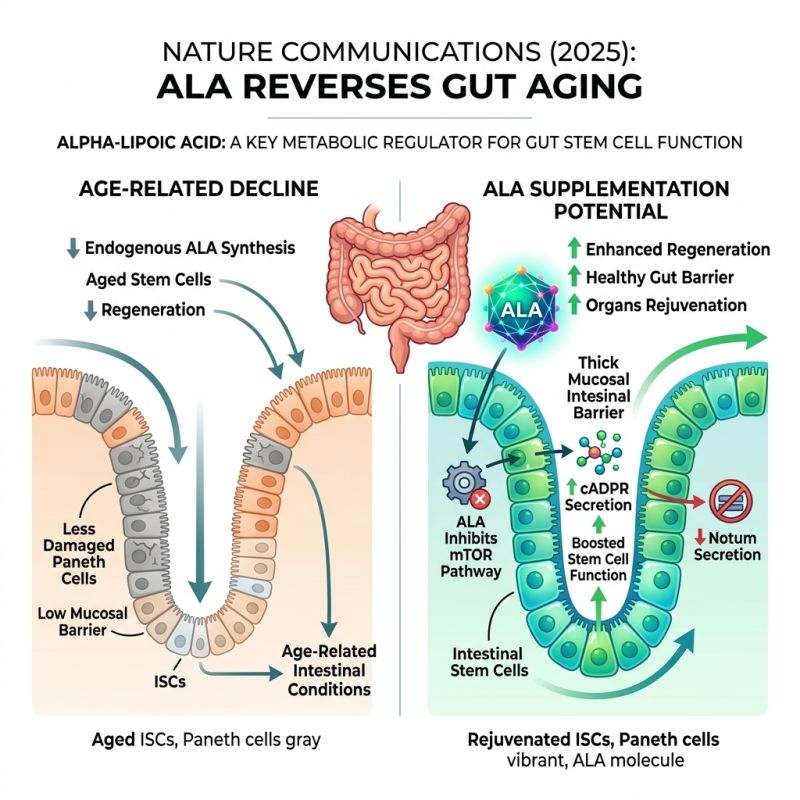
A groundbreaking study recently published in *Nature Communications*(2025) has identified alpha-lipoic acid (ALA) as a key metabolic player in maintaining the regenerative power of the human gut.
The Scientific Context:
As we age, the regenerative capacity of the intestinal epithelia declines. This research reveals a critical mechanism: the natural synthesis of ALA decreases in the aged human small intestine, leading to the aging of Intestinal Stem Cells (ISCs).
Key Breakthroughs:
* Targeting Paneth Cells: The study shows that ALA doesn't just act on stem cells directly; it works through Paneth cells (the guardians of the intestinal niche).
* mTOR Pathway Inhibition: ALA supplementation inhibits the mTOR pathway in Paneth cells, which in turn:
1. Increases cADPR secretion: Boosting stem cell function.
2. Decreases Notum secretion: Removing a key inhibitor of gut regeneration.
* Human-Centric Evidence: The effects were validated in both old human intestinal organoids and mouse models, offering a tangible therapeutic path for age-related intestinal diseases.
Why This Matters for the Nutraceutical Industry:
This research elevates ALA from a "general antioxidant" to a targeted metabolic regulator for healthy aging and gut barrier integrity. For formulators, this provides a solid, peer-reviewed foundation for positioning R-ALA in premium longevity and digestive health protocols.
Science continues to prove that metabolic precursors like ALA are essential for more than just cellular energy—they are vital for organ-level rejuvenation.